

Floating Fish Feed Pellet Production Line Overview
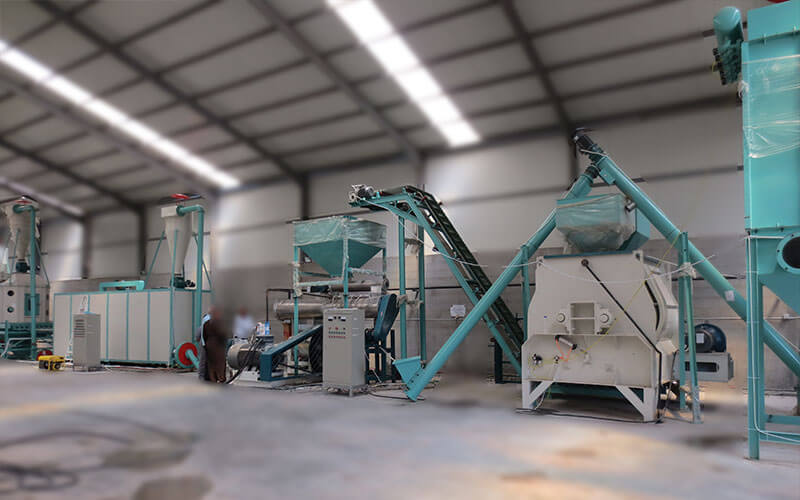
The Floating Fish Feed Pellet Production Line is a complete processing system used to produce puffed (extruded), floating fish feed pellets. The fish feed pellet line can be customized for small-scale, medium-scale, or industrial-scale floating fish feed production and typically includes grinding, mixing, extruding, drying, flavoring, and cooling processes. It is suitable for producing floating feed for all types of fish (e.g., tilapia, catfish, trout, goldfish), as well as some amphibians and aquatic animals. With compact design and excellent performance, this floating fish feed pellet plant can liberate you thoroughly from raw material intake to finished feed pellets bulk loading.
Fish Feed Plants Technical Parameters
Capacity: 100 kg/h – 5,000 kg/h
Pellet Size Range: 0.9 mm – 15 mm
Voltage: 220V/380V/415V (customizable)
Power Requirement: 50 kW – 250 kW, depending on scale
Operator Needed: 1–3 people
Installation Space: 30–200 ㎡, depending on scale
Suitable Applications
- Fish farms (freshwater and marine)
- Aquaculture companies.
- Feed mill plants
- Research institutes
- Pet food production (with formula change)
Advantages
- Floating pellets reduce feed waste and water pollution
- Improved digestibility due to puffed structure
- Long shelf life due to drying and oil coating process
- Nutrient retention and customizable feed formulas
- Cost-effective production with scalable investment
CONTACT US FOR A QUOTE
The Process of the Complete Fish Feed Production Line
Feed Grinding → Mixing → Extruding → Pellet Drying → Oil Spraying → Pellet Cooling → Pellet Packaging
1. Feed Grinding—Feed Hammer Mill
To produce high-quality fish feed pellets, fine grinding of raw materials is necessary. The finer the material is, the more surface area will be exposed, thus achieving the great gelatinization in conditioning. The feed hammer mill is adopted in this fish feed pellet line, which can benefit users with an ideal crushing effect.

2. Feed Mixing—Fish Feed Mixer
Uniformly blends different powdered ingredients, additives, and nutrients. Essential for nutritional balance and pellet consistency.
Efficient mixing is the key step in a fish feed pellet plant due to its direct influence on the feed pellet quality. Proper mixing will increase diet uniformity and improve the feedstuff quality. Our mixing machine stands out with high mixing uniformity, CV≤5%, and no segregation.

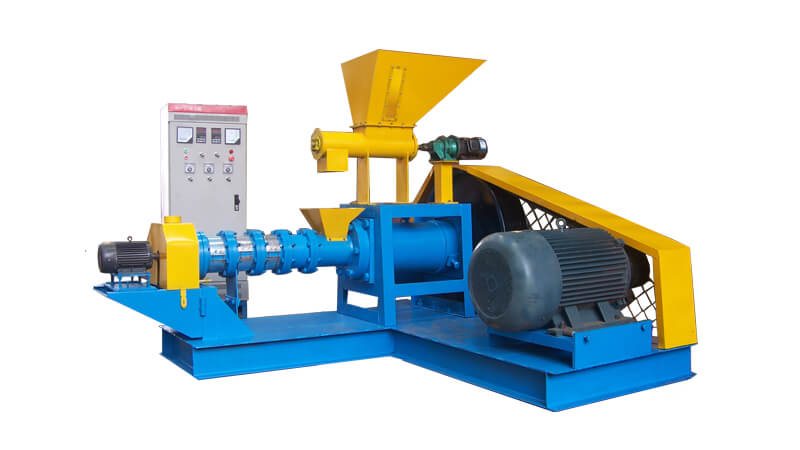
3. Fish Feed Extruding—Floating Fish Feed Extruder
The core machine of the floating fish feed line. It cooks and expands feed ingredients under high temperature and pressure, forming floating pellets that retain shape in water. Floating fish feed extruders are widely used for producing a variety of materials into high-grade aquatic feed pellets for fish, catfish, shrimps, crab, etc. The final pellets have a unique shape and good taste, high nutrition, and smooth textures. For feeds of fish and shrimp, the floating time in water can be adjusted by the extrusion degree adjustment. Feed pellets dia. is 0.9-15mm. We have wet-type fish feed extruders and dry-type fish feed extruders to meet your fish feed pellet production needs.

4. Drying—Fish Feed Pellet Dryer (Multi-layer Belt Dryer or Vertical Dryer)
Dries the moisture content in the pellets to ensure longer shelf life. It can be powered by electricity, gas, or diesel. Featured by high drying uniformity and low breaking ratio, the mesh belt dryer is preferred to reduce the high moisture content of feed pellets coming out from the extruder.
5. Oil Spraying Flavoring—Oil Coating Machine
Sprays oil, vitamins, and flavor enhancers on the pellets. Improves palatability, nutritional value, and appearance. In the drum-type spraying machine, the additives can be contacted with the pellet surface sufficiently and sprayed evenly. After spraying, the fish feed pellets are balanced and rich in nutrition.
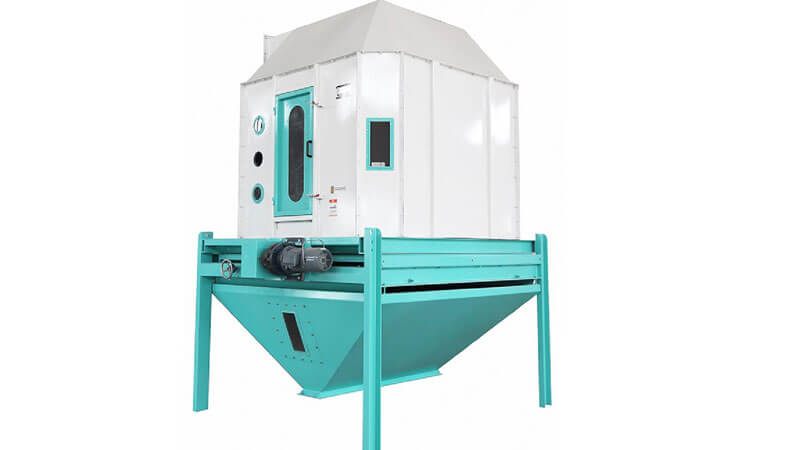
6. Fish Feed Pellet Cooling—Count Flow Pellet Cooler
Reduces pellet temperature and prevents moisture condensation. Enhances pellet hardness and durability.
The counter-flow pellet cooler is used for cooling the fish feed pellets that are just coming out of the oil coating machine. It uses the counter-current cooling principle to cool the pellets with high temperature and high humidity, to avoid the shock cooling phenomenon when the cold air contacts the hot material, thus preventing the pellet appearance cracking.
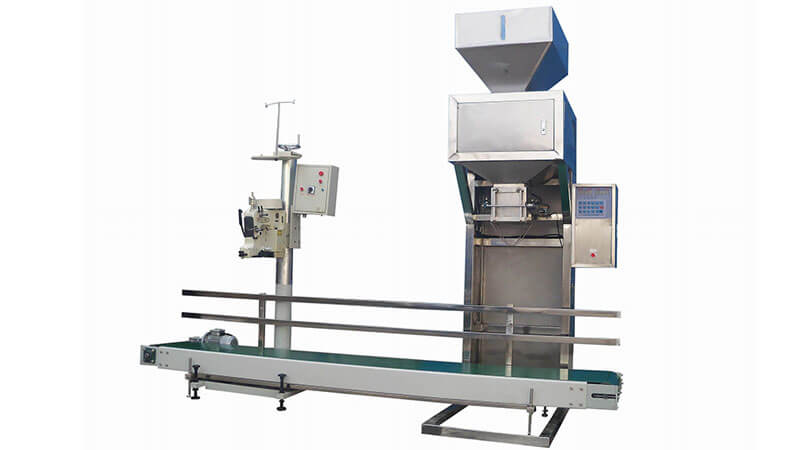
7. Fish Feed Pellet Packaging (optional)— Pellet Packing Machine
Weighs and packs the pellets into bags (5kg–50kg). Can be manual or automatic, based on budget and need
As the last step in the floating fish feed pellet line, packaging is optional according to your needs. The automatic feed pellet packing machine is always combined with the transport mechanism and the sewing machine to constitute the automatic feed pellet weighing and packing system used in animal feed factories.
Why Choose Our Floating Fish Feed Pellet Plants
1. Wide applicable scope: This production line can produce floating fish feed, sinking fish feed, pet feed, livestock feed, etc.
2. Best-selling worldwide: Our fish feed pellet plants are hot-selling in Nigeria, Malaysia, Australia, India, Sri Lanka, South Korea, etc.
3. Good Working Performance. Smooth operation. Cost-effective. Long service life.

CONTACT US FOR A QUOTE
Floating Fish Feed Plant Features
- Make floating pellets that remain on the water surface for easy consumption
- Fully automatic or semi-automatic line options
- Various Capacities Available. We can also customize different fish feed pellet plants depending on your raw materials and specific requirements.
- Adjustable pellet size: 1mm to 15mm for different species and growth stages
- Dry and wet-type extruder options, depending on budget and requirements
- Can process a variety of raw materials, including cereals, fish meal, bone meal, soybean meal, etc.
- Wide applications. Besides floating fish feed pellets and sinking fish feed pellets, this production line can also produce high-quality feed for pets, poultry, and livestock etc.

Floating Fish Feed Pellet Production Line FAQs
How to Improve the Water Stability of Floating Fish Feed Pellets
• Using finely ground ingredients so that the small cavities on the surface of the pellets are filled up, thereby reducing the rate at which water can penetrate the pellet.
• Increasing the compaction of the mixture by applying more force during pelleting.
• Cooking the mash or the moist pellets (e.g., by steaming) thus increases.
• Avoiding high concentrations of fat, water repellent, or highly absorbing water ingredients in the diet mixture.
• Using binders.
Fish Feed Diet Formula
|
Ingredient
|
1
|
2
|
3
|
|
percentage
|
%
|
%
|
%
|
|
Fish meal 52%CP
|
18.2
|
54.6
|
82.0
|
|
Fish meal 50%CP
Meat and bone meal |
/
|
||
|
Rice bran
Rice pollard |
20.0
|
11.3
|
16.5
|
|
Mill mix
Wheat flour |
30.0
11.8 |
12.6
20.0 |
/
|
|
Coconut meal
|
20.0
|
||
|
Vitamin and mineral premix
|
/
|
1.5
|
1.5
|
|
Total
|
100.0
|
100.0
|
100.0
|
|
Calculated composition
|
/
|
||
|
Moisture (%)
|
12.1
|
7.6
|
5.1
|
|
Protein (%)
Fat (%)
|
21.4
8.2
|
34.0
11.6
|
45.0
15.0
|
|
Ash (%)
|
8.0
|
13.9
|
18.9
|
|
Gross energy (MJ/kg)
|
16.1
|
16.3
|
16.4
|
Diet 1- low protein diet suitable for tilapia or carp in ponds stocked at low density with natural food
Diet 2- high protein diet suitable for tilapia or carp in ponds or cages without natural food
Diet 3- barramundi diet


